
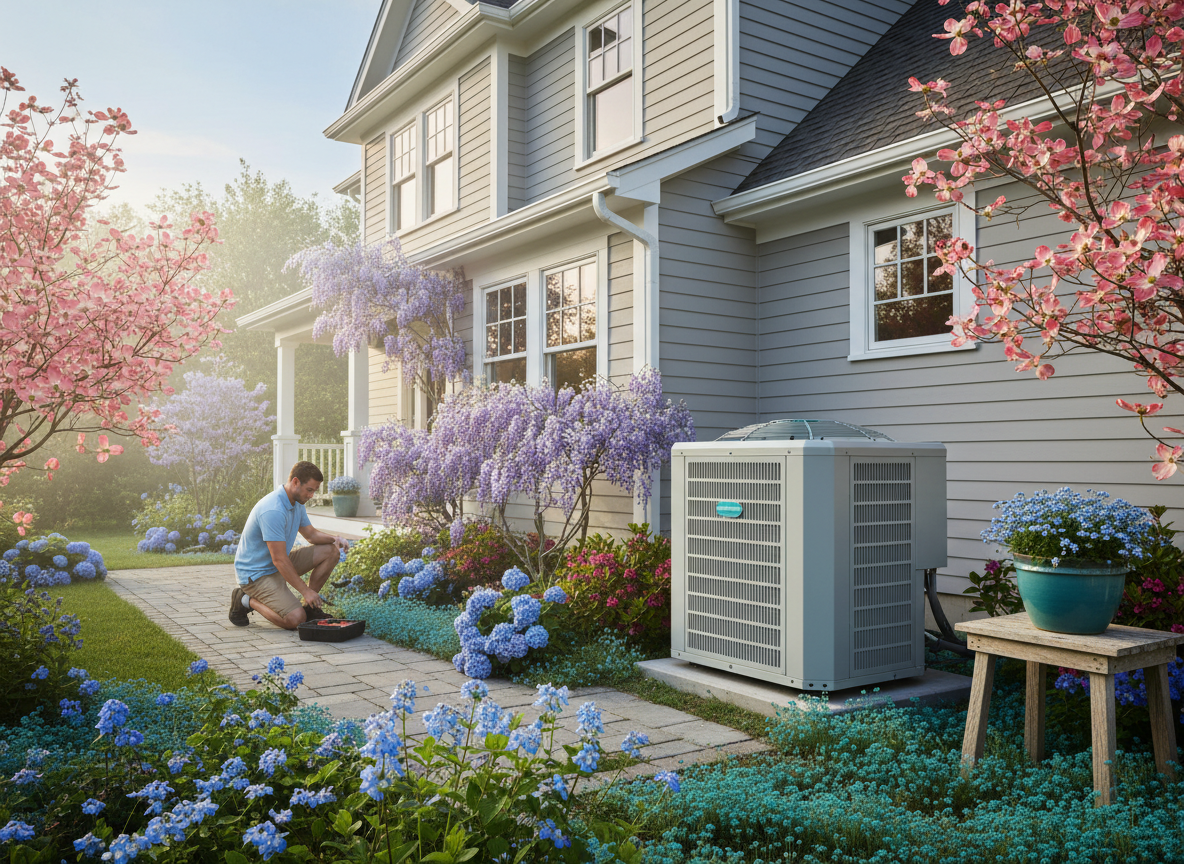
The Complete Spring HVAC Maintenance Checklist
Spring is the best time to prepare your AC for summer. This step-by-step checklist covers everything a homeowner can do — no tools or technician required.
Every item on this list can be done by any homeowner with no special tools. Doing this once each spring can prevent 60% of emergency AC calls and save you hundreds in repair costs.
Indoor checks
Replace or clean the air filter
This is the single most impactful thing you can do. A dirty filter restricts airflow, reduces efficiency, and can cause the evaporator coil to freeze. Replace disposable filters or wash reusable ones.
Open all supply vents and return grilles
Walk through every room and make sure no vents are closed, blocked by furniture, or covered by rugs. Restricted airflow causes uneven cooling and system strain.
Check the thermostat
Switch from 'Heat' to 'Cool' mode. Set the fan to 'Auto' (not 'On'). Replace batteries if it's battery-powered. Set the temperature a few degrees below room temp and wait 5 minutes for the system to kick on.
Inspect the condensate drain line
Find the PVC drain pipe near your indoor unit. Pour 1 cup of distilled white vinegar down the access point to prevent algae and mold buildup that causes clogs.
Check the drain pan
Look under the evaporator coil for standing water or rust in the drain pan. Standing water means the drain is partially blocked. Rust means the pan may need replacement.
Outdoor checks
Clear debris around the condenser
Remove leaves, branches, grass clippings, and any objects within 2 feet of the outdoor unit. Good airflow is essential for heat dissipation.
Rinse the condenser coils
Use a garden hose with moderate pressure to spray the coils from the inside out. This removes dust, pollen, and dirt that accumulated over winter. For heavy buildup, use a coil cleaner spray.
Inspect the refrigerant lines
Look at the copper lines running from the outdoor unit to your house. The larger line should have foam insulation. If the insulation is damaged or missing, replace it (available at hardware stores for ~$5).
Check the disconnect box
The gray box near your outdoor unit contains the power disconnect. Open it and make sure the pull-out switch is properly seated. Look for signs of corrosion or burn marks.
Listen for unusual sounds
Turn the system on and stand near the outdoor unit. Normal sounds: a steady hum and fan whoosh. Warning sounds: buzzing, clicking, grinding, or rattling. These indicate a failing component.
If you hear unusual sounds, notice ice on the refrigerant lines, smell something burning, or the system simply won't turn on after completing this checklist — it's time for a professional inspection. Run the AirWise diagnostic first to understand the likely issue and fair cost before you call.
Done with the checklist? Check your health score.
Get a free health score based on your unit's brand and age — plus personalized maintenance tips.